
In modern logistics operations, speed is no longer just about moving cargo faster — it’s about moving information instantly.
At CubiQ, we recently introduced a new capability that takes operational connectivity to the next level:
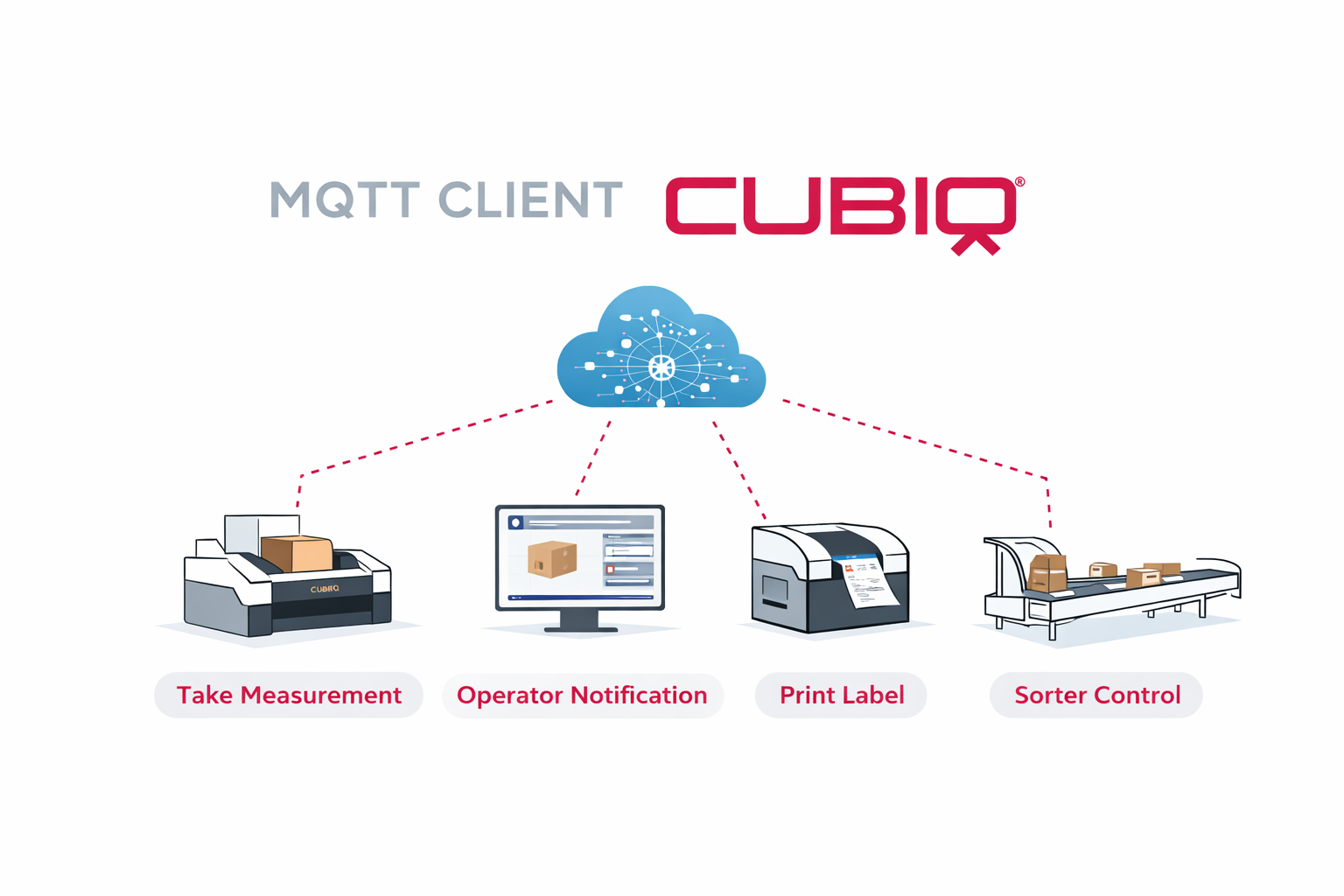
an MQTT Client that enables real-time, two-way communication between the cloud and CubiQ machines.
Until now, most warehouse systems focused on sending data from machines to the cloud.
But real-world operations demand more.
There are many situations where you need to push information back to the machine:
That’s why we built a cloud-to-machine communication layer, designed specifically for high-speed warehouse environments.
The CubiQ MQTT Client enables a wide range of real-time actions, including:
Use CubiQ’s high-performance printing service to trigger label printing directly from the cloud — reducing wait times and eliminating manual steps.
Send images and text from the cloud and display them as popups on CubiQ devices, guiding operators as part of CubiQ workflows.
Push UI changes, messages, and workflow updates dynamically to CubiQ machines without redeploying software.
Send live configuration updates from the Sorter Configurator in the cloud directly to sorting equipment on the warehouse floor.
Trigger machine actions such as:
All initiated directly from cloud APIs.
This isn’t just messaging — it’s operational-grade communication.
Current measured latency is 50–80 milliseconds, making MQTT updates feel almost instantaneous to operators and systems alike.
This enables real-time decision-making and immediate execution at the edge.
The CubiQ MQTT Client is built to support:
It seamlessly integrates with existing CubiQ workflows and cloud services, without adding complexity to on-site operations.
With MQTT, CubiQ evolves from a data-capture platform into a fully interactive operational system — where the cloud doesn’t just receive information, but actively orchestrates warehouse actions in real time.
Best,
Camilo
_vector.svg)