
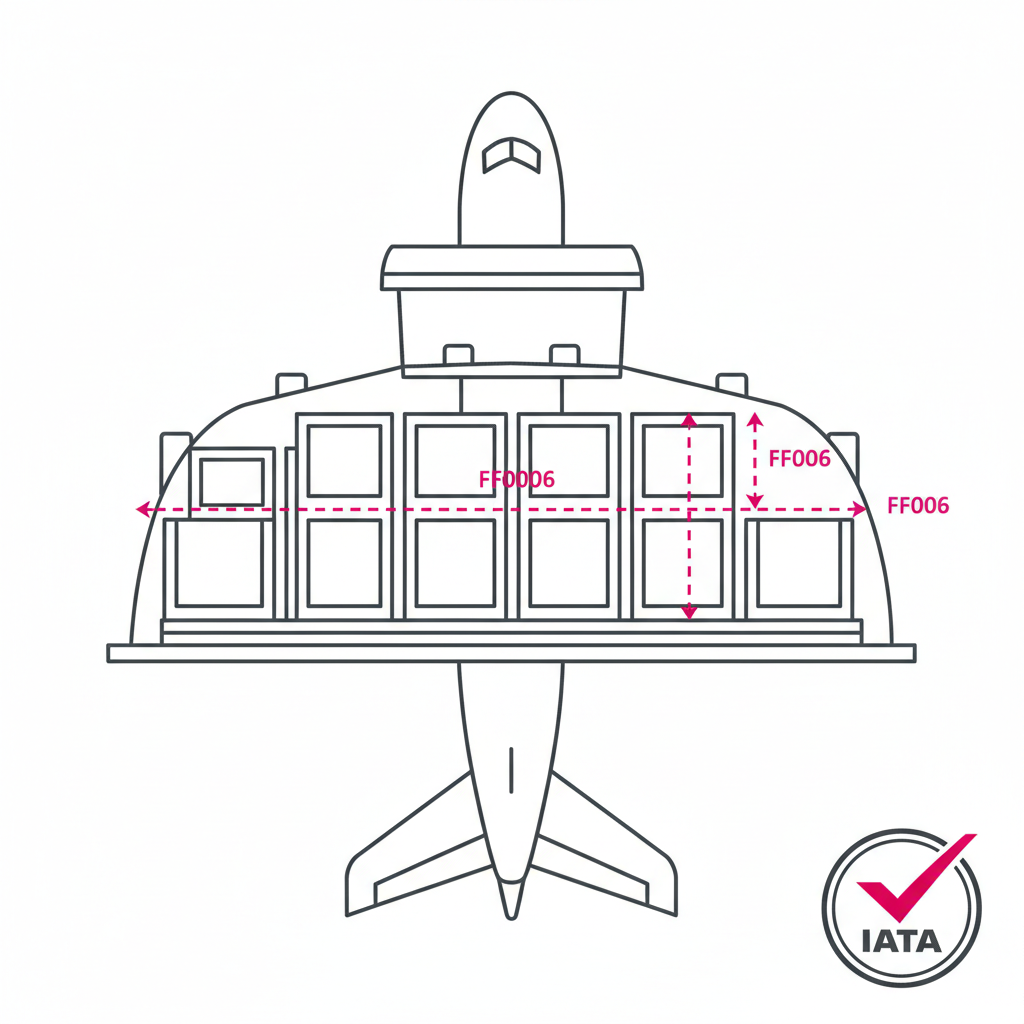
Air cargo is priced differently from ground freight. In ground shipping, weight typically drives the billing calculation. In air cargo, the governing standard is chargeable weight: the greater of actual weight or volumetric weight. Volumetric weight is calculated using the IATA 1:6000 factor, which means 6,000 cubic centimeters equals one kilogram of chargeable weight.
This standard makes dimension capture essential for every air cargo shipment. A carton that weighs 5kg but measures 60 x 50 x 40 cm has a volumetric weight of (60x50x40)/6000 = 20kg. The chargeable weight is 20kg, not 5kg. Capturing this correctly at acceptance determines whether the airline recovers the full revenue the shipment should generate.
The IATA 1:6000 standard is the international convention for converting cargo volume to chargeable weight for air freight. The formula:
Volumetric weight (kg) = (L cm x W cm x H cm) / 6,000
Or in imperial units: (L in x W in x H in) / 366 = volumetric weight in kg
Chargeable weight = Maximum of (actual gross weight, volumetric weight)
This standard applies to IATA member airlines for international air freight. Some carriers apply modified factors for specific routes, commodity types, or contract freight. The standard applies to all shipment types: loose cartons, palletized freight, and ULD-loaded cargo.
For mixed-density shipments (multiple pieces on one air waybill), chargeable weight is calculated on the entire shipment, not piece by piece. This makes accurate dimensioning of each piece critical for correct total chargeable weight calculation.
ULDs are standardized containers and pallets used to load consolidated air cargo into aircraft holds. Common ULD types include:
ULD optimization is the process of planning which cargo pieces load into which ULD to maximize space utilization while respecting weight limits and contour constraints. A ULD loaded to 85% of its volume capacity generates significantly more revenue per flight than one loaded to 60%.
Accurate piece dimensions are the input to ULD build-up planning systems. Without dimensioning, ULD optimization is based on estimated dimensions, which results in miscalculated load plans, ULD overpacking (pieces that do not fit the planned build), and revenue loss from poor space utilization.
At an air cargo terminal, dimensioning systems are deployed at two primary points:
When a shipper delivers cargo to the terminal, the cargo is measured at the acceptance counter or on an adjacent dimensioning platform. The system captures L, W, and H for each piece, reads the barcode or air waybill number, and calculates volumetric weight automatically. The verified chargeable weight is applied to the air waybill before rating.
This process eliminates the most common source of revenue leakage in air cargo: accepted shipments where the declared dimensions understate the actual volume, causing the chargeable weight to be understated and the airline to be undercompensated for the space the cargo occupies.
When ULDs are loaded and sealed, a final dimension verification ensures the built-up ULD does not exceed aircraft contour limits. Oversized ULDs that extend beyond the aircraft floor contour cannot be loaded and must be rebuilt at the last minute, causing flight delays and operational disruption.
Drive-through pallet scanning systems verify built ULD dimensions in under 10 seconds, allowing ground handlers to confirm compliance with aircraft contour templates before the ULD moves to the ramp.
The financial impact of accurate dimensioning in air cargo is direct and immediate. Consider a cargo terminal accepting 500 shipments per day:
This calculation illustrates why air cargo operators are early adopters of dimensioning technology: the revenue recovery value is large relative to the system investment, and the financial impact is measurable from the first day of operation.
Beyond billing, dimensioning plays a compliance role for special cargo categories:
Volumetric weight in kg = (Length in cm x Width in cm x Height in cm) / 6,000. In imperial: (L inches x W inches x H inches) / 366. Chargeable weight is the higher of actual weight or volumetric weight.
Aircraft have fixed volume (cargo hold space) and fixed weight limits. Low-density freight occupies volume without contributing proportionally to weight. Volumetric weight billing ensures that low-density cargo is priced for the space it occupies, not just its physical weight.
IATA recommends measurement accuracy of +/-1cm per dimension for air cargo chargeable weight calculation. At this accuracy, the volumetric weight calculation for a standard carton will be within 2-3% of the true value, which is within acceptable billing tolerance.
Yes, dimensioning hardware is agnostic to the billing standard applied. The same measurement (L, W, H) is used to calculate IATA 1:6000 volumetric weight for air cargo and NMFC density-based class for ground LTL freight. The billing calculation is applied in the software layer, not the hardware.
_vector.svg)