
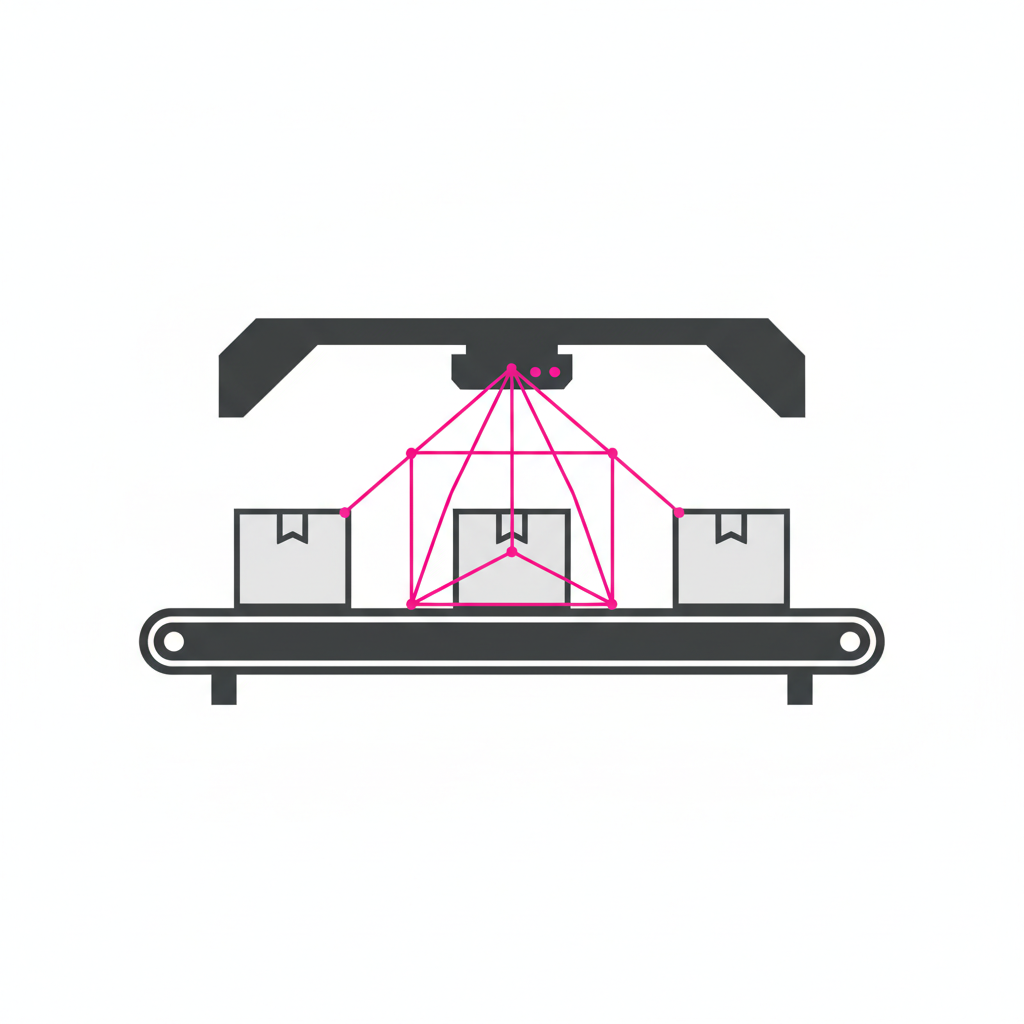
An automated dimensioning system captures the length, width, height, and weight of a parcel, pallet, or freight item in real time — without manual measurement. These systems combine sensors, cameras, and AI algorithms to deliver certified data in under one second.
For warehouses, couriers, and freight operators, the shift from manual to automated dimensioning translates directly into fewer billing disputes, faster throughput, and traceable proof of measurement.
Manual measurement with tape measures or handheld devices costs operators time, introduces human error, and creates blind spots in their data. Consider the impact:
Automated dimensioning systems eliminate all three problems simultaneously.
A static dimensioner requires the operator to place the item on a platform or zone and trigger a scan. These systems are ideal for:
CubiQ ONE is a static parcel dimensioner with sub-millimeter accuracy, HD photo capture, and direct API integration into WMS/ERP platforms.
In-motion or conveyor dimensioning systems scan packages as they travel on a belt — with no stops, no manual handling. Throughput ranges from 1,200 to 3,600+ packages per hour depending on the system.
CubiQ LINE was purpose-built for high-volume sorting lines. It captures dimensions, weight, barcodes, and OCR labels in a single pass.
For oversized cargo — pallets, crates, and irregularly shaped freight — specialized freight dimensioning systems use multi-camera arrays or LiDAR sensors to envelope the item and return certified measurements.
CubiQ X handles pallet dimensioning and oversized freight scanning with photographic evidence for each scan.
| Metric | What to Look For |
|---|---|
| Accuracy | ±2 mm or better for parcels; ±5 mm for freight |
| Throughput | Parcels/hour supported at peak volume |
| Integration | REST API, webhooks, direct WMS/ERP connectors |
| Certification | IATA, OIML, or regional trade certification |
| Footprint | Space required at the station or on the line |
Modern automated dimensioning solutions expose a REST API that sends measurement data — dimensions, weight, barcode, photo URL, and timestamp — to any downstream system. Integration typically takes 1–3 days for IT teams already familiar with REST APIs.
CubiQ supports native connectors for CargoWise, SAP, Oracle WMS, and custom ERP environments. All data is available via real-time dashboard and historical export.
Operators who switch to automated dimensioning typically report:
The right system depends on three factors: your daily volume, your item mix (parcels vs. pallets), and your integration requirements.
All CubiQ systems share a unified API and dashboard, so data from multiple stations consolidates in one place.
If you are evaluating automated dimensioning solutions, the fastest way to size the right system is a quick logistics assessment — a 30-minute session where your operation's volume, item mix, and integration requirements are mapped to the right hardware and configuration.
Book a free assessment with a CubiQ engineer to see measurement accuracy, throughput simulations, and integration paths for your specific setup.
_vector.svg)