
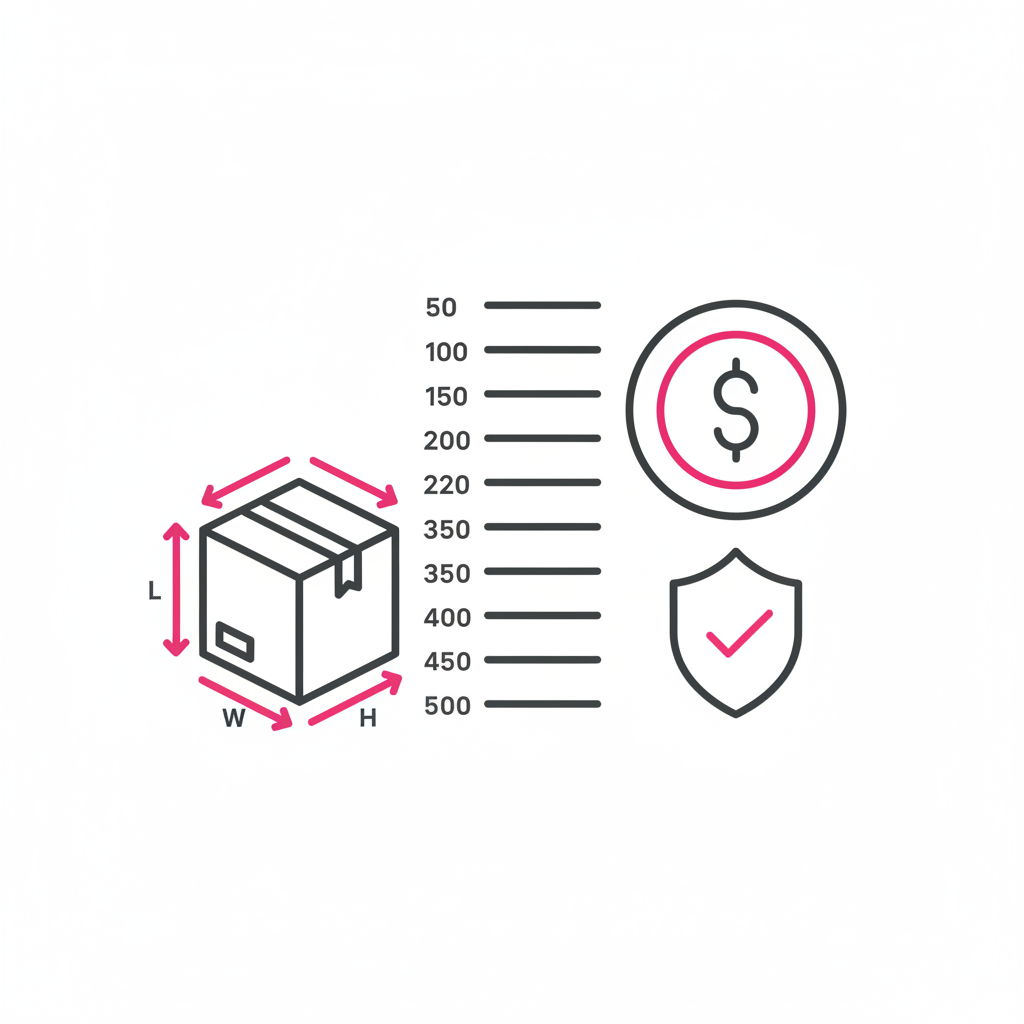
The National Motor Freight Classification (NMFC) is a standardized system that assigns a freight class to every commodity transported via less-than-truckload (LTL) freight in North America. Maintained by the National Motor Freight Traffic Association (NMFTA), the NMFC assigns classes from 50 to 500 based on a commodity's transportability, which is evaluated across four factors: density, stowability, handling, and liability.
Of these four factors, density is the primary driver for most commodities. Density is calculated from weight and physical dimensions: the heavier and more compact the freight, the lower the class and the lower the shipping rate per hundredweight. Lighter, bulkier freight receives a higher class and a higher rate.
The NMFC contains 18 classes, each corresponding to a density range:
The formula for density-based freight class calculation:
Example: A pallet measuring 48 x 48 x 60 inches and weighing 400 pounds.
Volume = (48 x 48 x 60) / 1,728 = 80 cubic feet
Density = 400 / 80 = 5 lbs/cubic foot
Freight class = Class 175
A freight classification dispute arises when the carrier's measured freight class at the terminal differs from the class declared by the shipper at the time of tender. This can happen because:
When a carrier detects a discrepancy, it issues a freight bill adjustment (FBA). The shipper then pays the difference between the declared class rate and the actual class rate, plus any re-weigh or reclassification fees. Disputes over FBAs require the shipper to provide evidence that the original dimensions were correct.
A dimensioning system eliminates the root cause of most classification disputes: inaccurate dimensions at the point of tender. When a shipper measures every outbound shipment with a calibrated dimensioning system:
For LTL carriers, dimensioning systems on the inbound dock serve the same function from the other direction: they verify that incoming freight matches the shipper's declared class before accepting the shipment at the quoted rate.
The NMFC has been shifting toward universal density-based classification for most commodities, reducing reliance on commodity-specific item numbers. This transition, known as simplified freight classification, is driven by two factors:
For shippers, this shift means that accurate dimension capture is now more directly tied to freight cost than it has ever been. Every inch counts because every inch affects density, and density determines class.
Inaccurate shipper-declared dimensions. When the carrier measures freight and finds a larger volume than declared, the density is lower than declared, which places the freight in a higher (more expensive) class. Calibrated dimensioning at the shipper's dock eliminates this discrepancy.
Yes. You must provide evidence that your declared dimensions were correct: a timestamped measurement record from a calibrated dimensioning system, photos of the shipment, and the weight ticket. Carriers will reverse reclassification charges when presented with credible measurement evidence.
Most major LTL carriers in the US use NMFC as the basis for freight class pricing. Some carriers offer simplified pricing (density-only tiers) that does not require NMFC item numbers. Check your carrier's rate schedule to confirm which classification system applies.
The NMFTA publishes NMFC updates periodically. Item descriptions, class assignments, and density rules can change. Shippers should review their commodity classifications annually or when product packaging or dimensions change significantly.
_vector.svg)