
A freight dimensioning system is a capital investment, not an operating expense. Unlike software subscriptions that can be terminated in 30 days, a dimensioner is physically installed at your dock, integrated with your WMS and TMS, and expected to perform for 5-10 years. The decision to invest requires a credible ROI calculation that goes beyond vendor-supplied case studies.
The good news is that dimensioning ROI is unusually easy to quantify. The value flows from three primary sources, all of which generate measurable financial outcomes: recovered dimensional weight revenue, eliminated billing disputes and adjustments, and reduced manual labor. Each of these can be estimated from data that most logistics operations already track.
Dimensional weight billing is the practice of charging for the volume a shipment occupies in a vehicle, rather than just its actual weight. For lightweight but bulky freight, dimensional weight often exceeds actual weight, and the difference becomes recoverable revenue when a dimensioner is used to capture it.
The DIM weight formula: (L x W x H in inches) / DIM factor = dimensional weight in pounds. The current DIM factor for most major US parcel carriers is 139 (ground) and varies for international and LTL shipments.
A shipment that actually weighs 8 pounds but measures 16 x 14 x 10 inches has a dimensional weight of (16x14x10)/139 = 16.1 lbs. Without a dimensioner, this package is likely billed at 8 pounds. With a dimensioner, it is billed at 16 pounds. The revenue difference per shipment is the value of recovery.
For a courier or 3PL processing 3,000 packages per day with an average DIM weight recovery of $0.80 per package (typical for mixed freight operations), the annual recovery value is approximately $876,000. Even operations with lower recovery rates per package generate six-figure annual recoveries at meaningful daily volumes.
LTL shippers face carrier-initiated freight bill adjustments (FBAs) when the carrier's measured dimensions or weight differ from the shipper's declared values. These adjustments represent both direct cost (the additional charge) and indirect cost (the administrative labor to dispute, investigate, and resolve each claim).
The value of eliminated FBAs comes from two components:
For a 3PL or LTL carrier processing 2,000 LTL shipments per day with a 5% re-weigh rate and average adjustment of $125, the annual adjustment cost is approximately $4.6 million. Accurate dimensioning at the point of tender eliminates the majority of this exposure.
Manual measurement is slow and error-prone. A warehouse worker measuring a pallet with a tape measure takes 45-90 seconds per measurement, makes recording errors roughly 8-12% of the time, and cannot produce a verifiable, timestamped audit record. An automated dimensioner completes the same measurement in under two seconds with documented accuracy.
For an inbound operation receiving 500 pallets per day, replacing manual measurement with an automated dimensioner saves approximately 4-7 labor-hours per day. At $50/hour fully-loaded cost, this is $200-350 in daily labor savings, or $50,000-$90,000 annually.
Beyond direct labor, automated dimensioning eliminates the dock bottleneck that occurs when measurement is slow. Faster dock clearance reduces detention and demurrage costs, improves carrier relationships, and increases the number of inbound loads a dock can process per shift.
The following example illustrates a representative ROI calculation for a mid-sized 3PL:
Operation profile: 3PL processing 5,000 shipments per day (mix of parcel and LTL), 250 operating days per year
Annual value generated:
Investment:
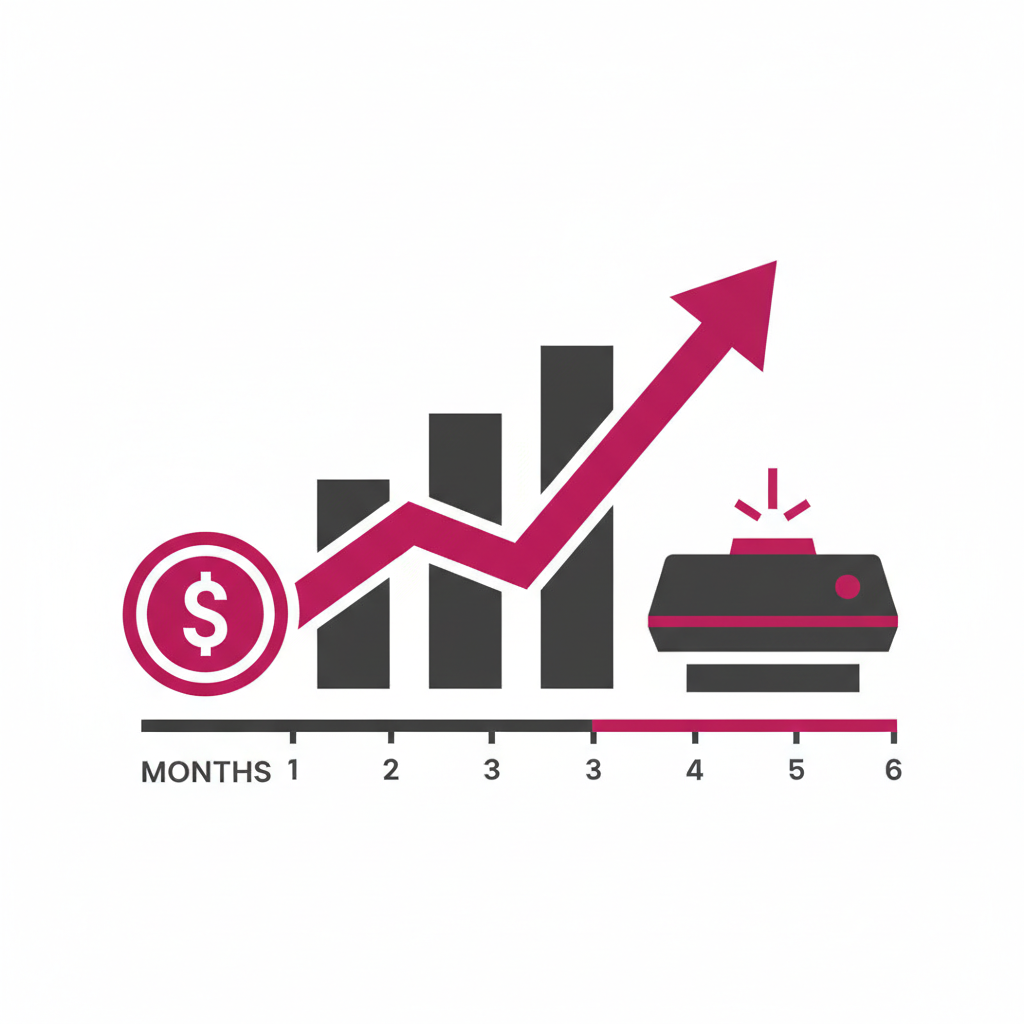
Payback period: 1-3 months for high-volume operations. 6-18 months for mid-volume operations with lower DIM weight recovery rates.
To build a credible ROI model for your operation:
High-volume parcel and courier operations (10,000+ packages per day) typically see payback in 1-6 months. Mid-volume LTL and warehouse operations (500-2,000 shipments per day) typically see payback in 6-18 months. Lower-volume operations should conduct a detailed ROI analysis before committing, as the payback period may extend to 2-3 years.
DIM weight recovery delivers the fastest and most predictable ROI for parcel and courier operations. FBA elimination delivers the largest dollar value for LTL carriers and shippers, but the full financial impact takes 2-3 months to manifest as existing disputes work through the claims process.
Present a conservative three-scenario model (low, expected, high recovery rates) based on a sample audit of recent shipments. Show the FBA history from your TMS or accounting system as evidence of current losses. Request that the vendor provide references from comparable operations with documented ROI results.
_vector.svg)