
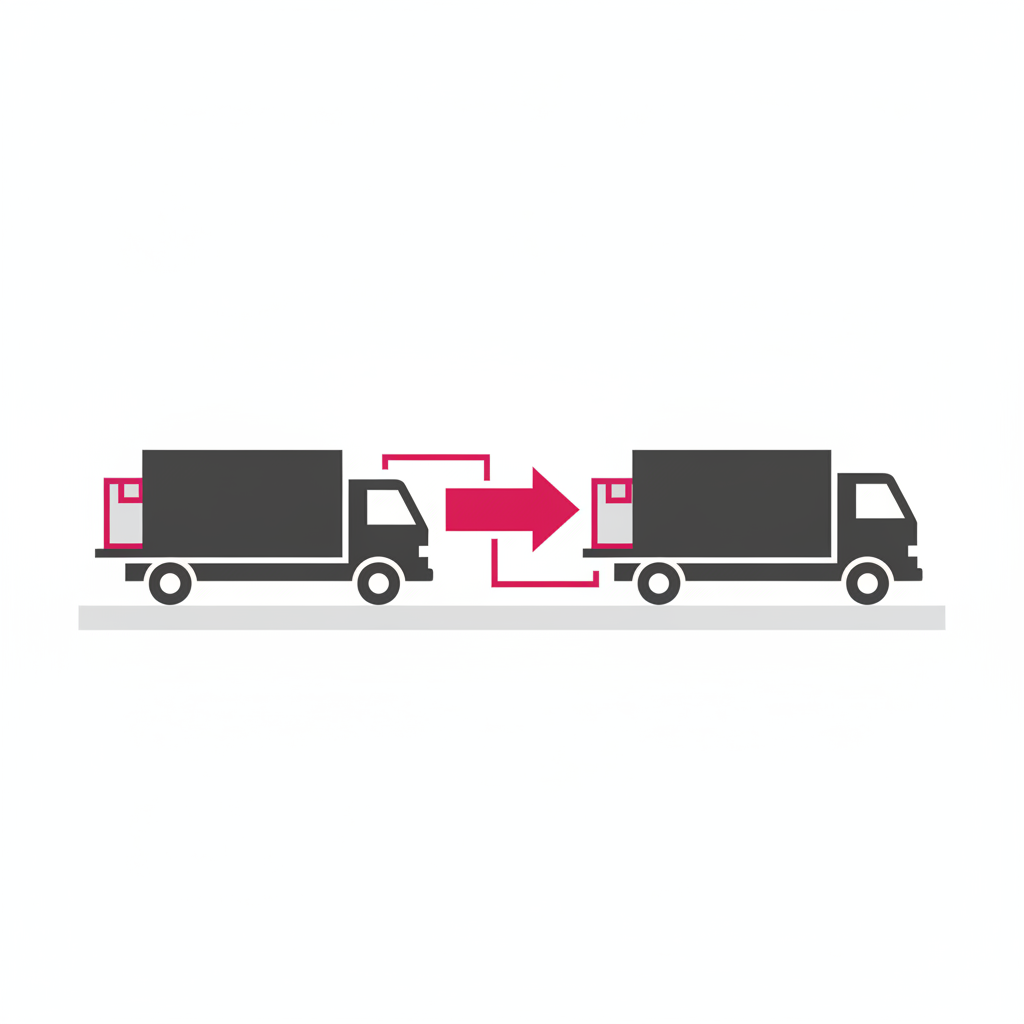
Transloading is the process of transferring cargo from one mode of transportation to another — for example, from a railcar to a truck, or from an ocean container to a domestic trailer — without the freight passing through a full warehouse operation. It is a critical node in intermodal supply chains, enabling cost-efficient movement of goods across modes that cannot connect directly.
Transload facilities are the physical hubs where this transfer happens. They typically sit near ports, rail terminals, or distribution corridors, and they handle high volumes of freight at speed.
Rail freight is 3–4× cheaper per ton-mile than over-the-road trucking for long hauls. But rail cannot deliver to most final destinations. Transloading bridges the gap: freight moves by rail for the long leg and transfers to trucks for regional distribution, combining the economics of both modes.
Key benefits of transloading:
Rail transloading involves moving bulk, breakbulk, or containerized freight from railcars to trucks. Operations must coordinate rail car spotting schedules, crane or forklift availability, and outbound truck dispatch windows — often with tight dwell-time constraints imposed by the railroad.
Technology gaps at rail transload facilities frequently lead to:
Modern transload software connects inbound rail manifests, freight measurement systems, and outbound truck documentation in a single workflow. When integrated with automated dimensioning equipment, the system captures dimensions and weight at the point of transfer and populates outbound bills of lading automatically.
CubiQ's dimensioning systems integrate directly with transload management workflows via REST API. As freight moves across the transload dock, each piece is measured, weighed, photographed, and linked to the correct outbound shipment record — eliminating manual keying and providing certified dimensional data for freight billing.
As nearshoring accelerates and intermodal volumes grow, transload facilities are under pressure to process more freight with the same footprint and workforce. Automation — dimensioning, OCR, data integration — is the lever that makes this possible without adding headcount.
Operators who deploy measurement automation at transload docks report processing time reductions of 40–60% per piece and near-elimination of outbound billing disputes caused by dimensional data errors.
Contact CubiQ to see how dimensioning and documentation automation can be deployed at your transload facility in days, not months.
_vector.svg)